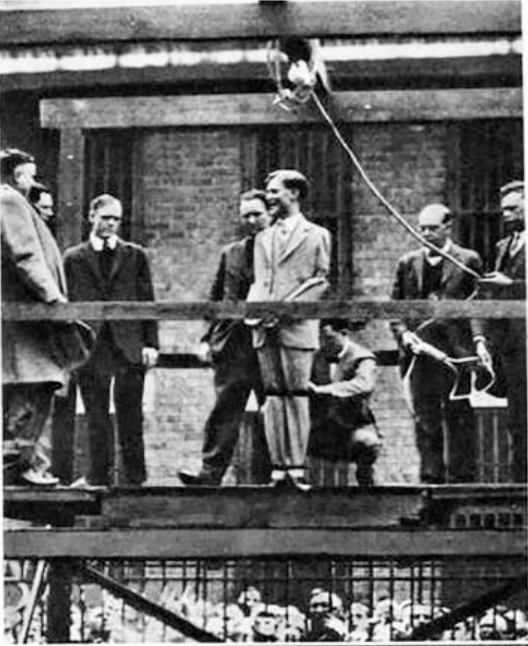
Birger wasn’t just a petty criminal—he was a Prohibition-era warlord, locked in a brutal battle for control of the southern Illinois bootlegging empire. His rival, Joe Adams, the mayor of West City, stood in his way. In 1927, Adams was gunned down, allegedly on Birger’s orders. That murder would be Birger’s undoing. Despite his swagger and deep network of loyal men, the law finally caught up with him. His trial was a spectacle, his conviction swift, and his death sentence unavoidable. And yet, as the noose was adjusted, Birger joked with the guards, his grin unsettling in its ease.
With a noose around his neck, Charles Birger became the last man to be publicly hanged in Illinois. The execution drew a crowd, curious to witness the final act of a man who had turned violence into theater. Even in death, Birger remained defiant, refusing blindfolds and standing upright with the gallows’ shadow draped across him. The smile never quite left his face. And as the trapdoor dropped, the legend of the laughing gangster took root—an unsettling reminder that in the lawless pockets of American history, even killers could command a stage.