

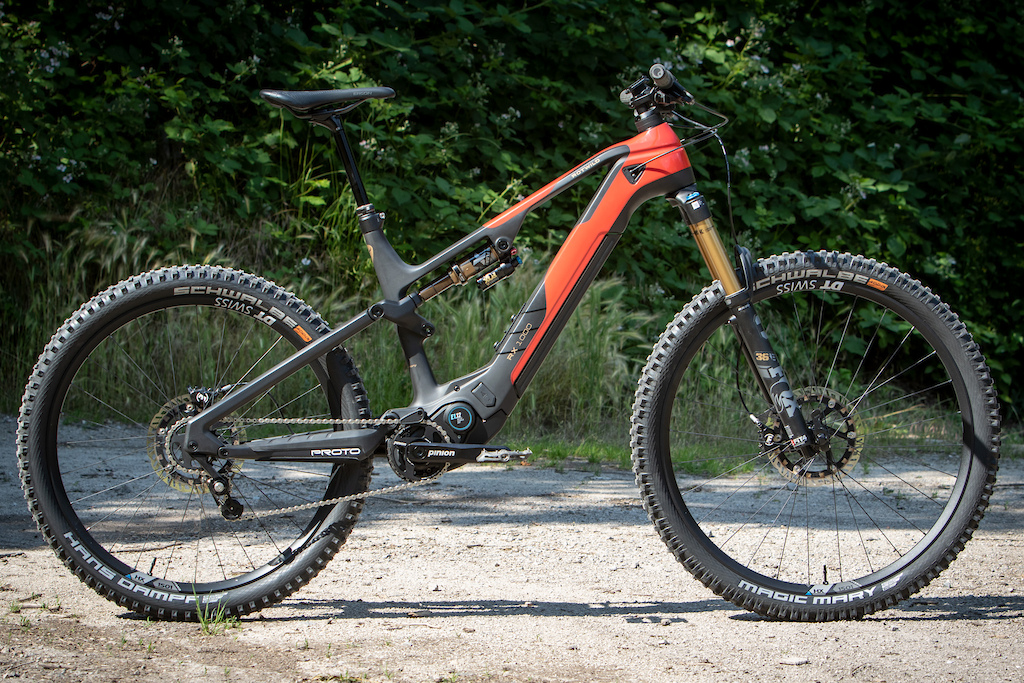
Pinion, known for their gearbox drivetrains, is taking things to another level with an e-bike motor with integrated gearbox, opening the doors to a powertrain option that may well change the way we think about e-bike transmissions.
Under the name of MGU (Motor.Gearbox.Unit), Pinion unifies motor and gearbox in a single unit that simply should cater better to the needs of an e-bike, as well as the higher stresses it can put on components. Apart from the fact that you have the option to get rid of that pesky rear derailleur. With all e-bike necessary components that surround their MGU, Pinion is talking about their Pinion E-Drive System.
Historically, German company Pinion is not exactly the first to combine an e-bike motor with an integrated gearbox – two years ago, I rode around the Eurobike parking lot with a prototype of Valeo's Cyclee e-bike motor with an integrated gearbox that they developed together with Effigear. Since then however, and even though the system should be available by now, their entry into the mountain bike world has been eerily quiet. Nevertheless, seeing the Pinion E-Drive System close to production already with some established brands having built the first models around the system for their 2024 lineup is quite the big deal.
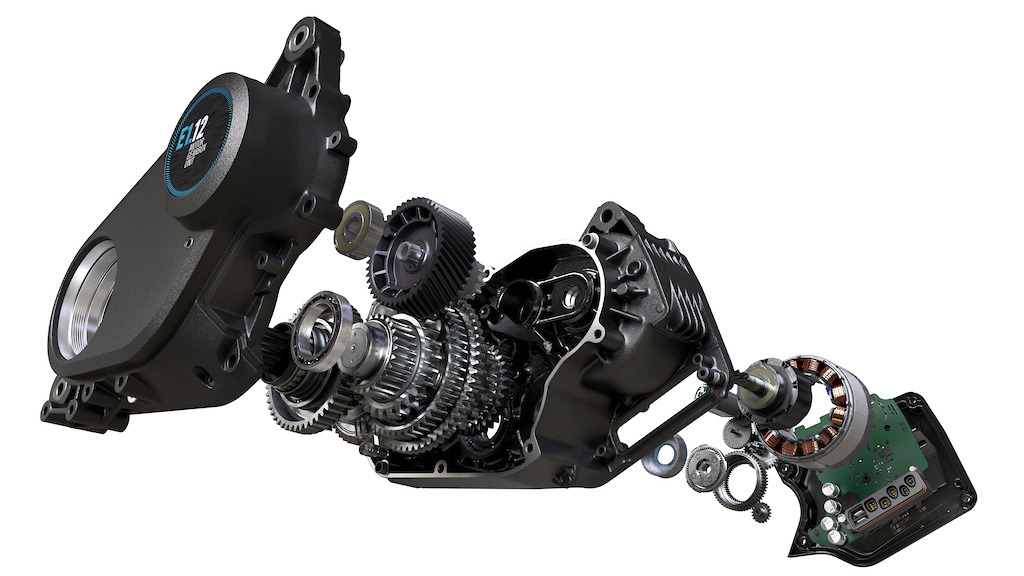
Motor.Gearbox.Unit
Pinion has started their development with a wear-free brushless electric motor for industrial applications made in Germany as a base and has optimized it by the use of more powerful magnets with a redesigned fit for e-bikes. Delivering a comparable drive torque of approximately 85Nm, the goal was to far exceed the strain and wear of cycling applications. Using the word comparable, because the power output of the Pinion MGU can't be exactly translated to regular systems when utilizing an internal gearbox.
A better value for comparison would be wheel torque – the power that actually reaches the wheel. For example, gears 1 to 4 of the Pinion MGU provide an under-drive and deliver up to 160Nm of torque. Therefore, talking about a ‘comparable drive torque' of approximately 85Nm serves only to put the MGU’s power output into context as an approximation for comparison’s sake.
A whole host of patented internal sensors continuously read the input torque, motor speed, the position of the shifting shaft and crank arms as well as the rider’s cadence, speed, and a bunch of other factors to ensure the most natural riding feel. The multi-sensor design notices even the tiniest inputs and smallest changes within the system while the special architecture of the micro controller further helps in increasing the efficiency of the system while simultaneously reducing the amount of heat generated during operation
The rest, you can read yourselves.


