
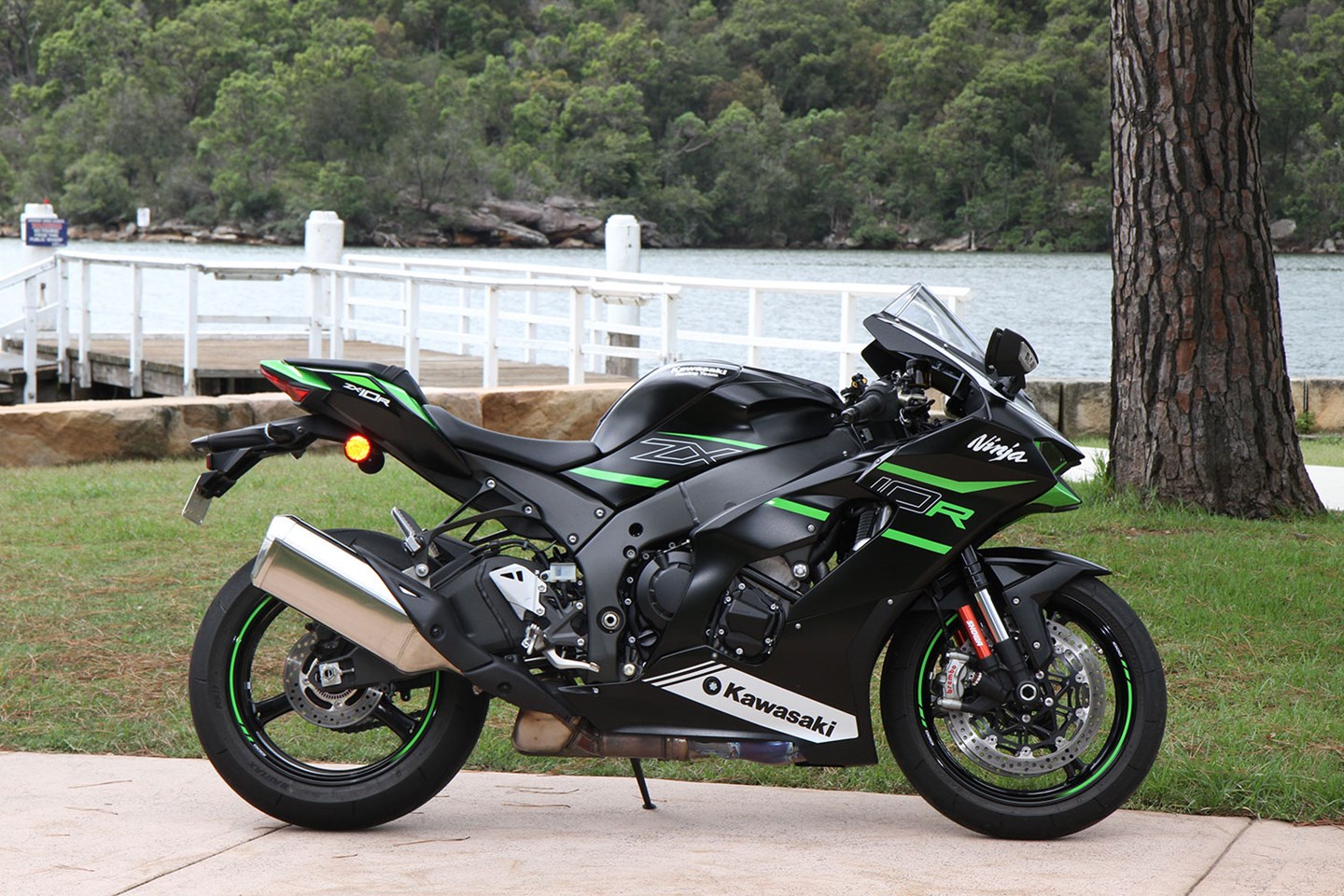
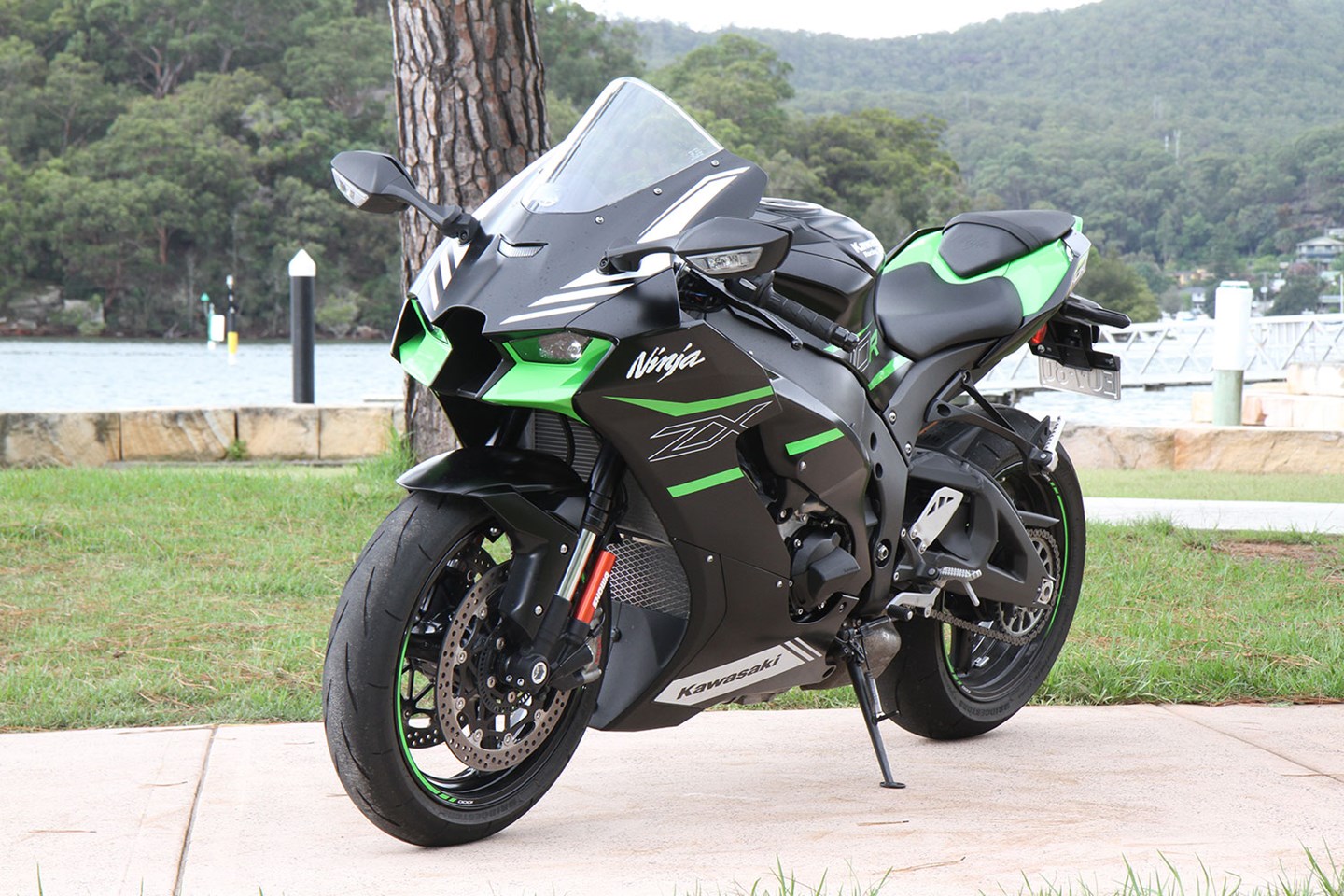
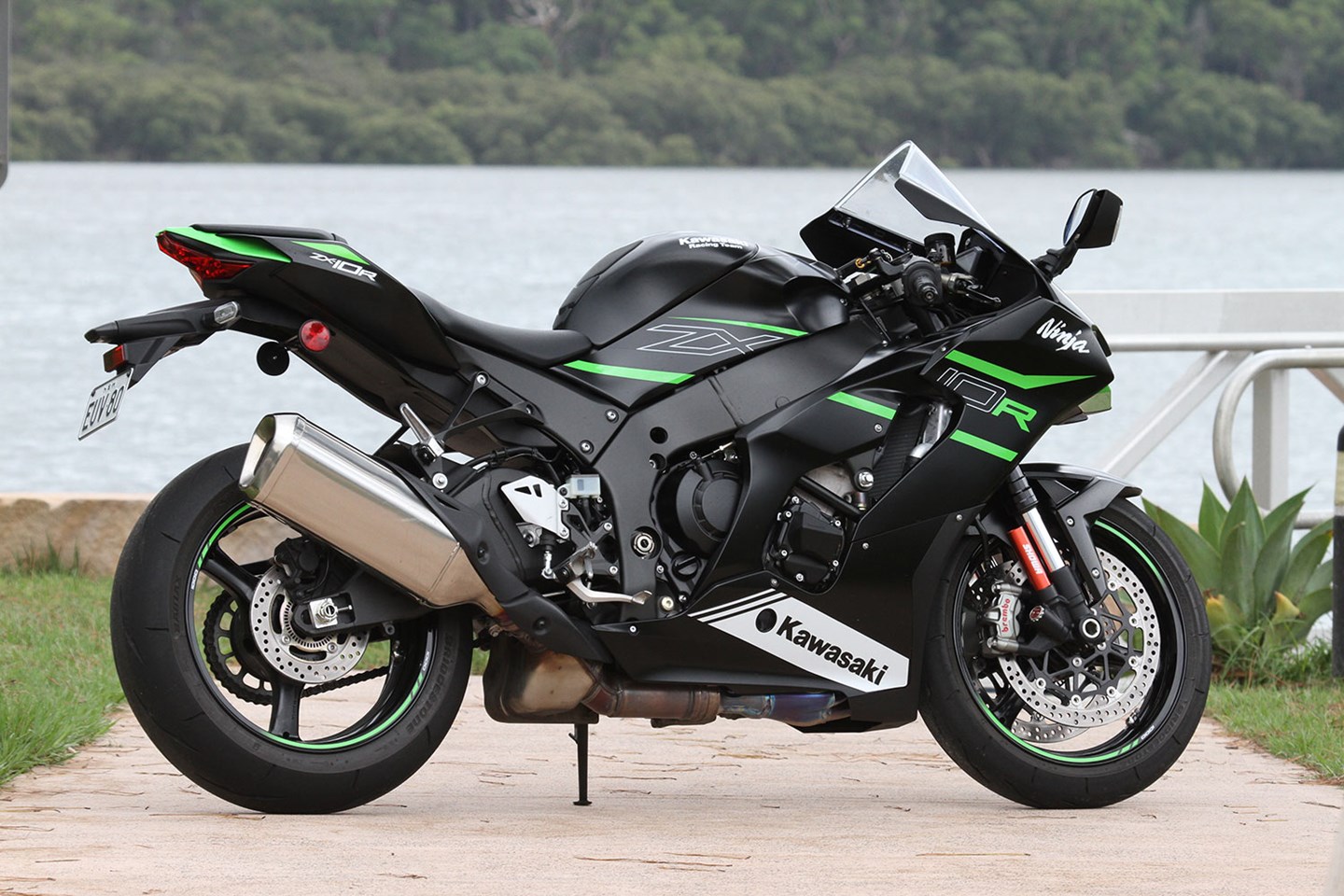

Styling, aerodynamics and built-in winglets are new, the engine, chassis, geometry and electronics are tweaked and it now finally has an all-singing colour TFT dash.
But despite already being one of the most cramped superbikes around, the biggest change comes from the riding position which is more race focused than before.
Don’t let that put you off, though, because although it’s now even better on the track, it’s still fantastic in the real world and even has cruise control. It now has all the makings of being able to live with the best of its rivals.
Revised chassis geometry sees the wheelbase lengthened from 1440mm to 1450mm thanks an 8mm longer swingarm (and 1mm lower pivot) and 2mm greater fork offset.
Trail is down from 107mm to 106.7mm and weight bias is shifted 0.2% to the front. Forks springs are softer (21.0N/mm from 21.5N/mm) and the shock spring stiffer (91 N/mm to 95 N/mm).
The outgoing ZX-10R liked to be loaded-up on the brakes to turn quickly, but the ’21 bike is nimbler with more feel from the front and support from the rear. Stability, braking power and Bridgestone RS11 Racing Street rubber are all superb.
Handlebars are flatter and 10mm further forward, the seat is more steeply angled, pegs are 5mm higher and screen 40mm taller.
All this adds up to a more race bike-like riding position, although the extra wind protection is useful on the road. I’m 6ft 1in and would drop the pegs back down 5mm if I owned one and preferred the old riding position.
My arms are now too straight, I can’t look up properly riding around town and have to crouch down to see out of the mirrors. On track the new ergonomics are an improvement, apart from the high pegs.
Now the ZX-10R’s inline four-cylinder engine meets Euro5 with power and torque remaining at 200bhp and 85ftlb.
Cylinder head porting, throttle valves and an air-cooled oil cooler are new, as is the exhaust, which sounds good for a standard system. The gearbox has lower first to third ratios, the rear sprocket is up two teeth (now 17/41) and there are now seven riding modes: Rain, Road, Sport and four custom settings.
The engine is peaky with soft power down low, but it’s but tuned for lap times and rear tyre life, so those who like power wheelies will be disappointed.
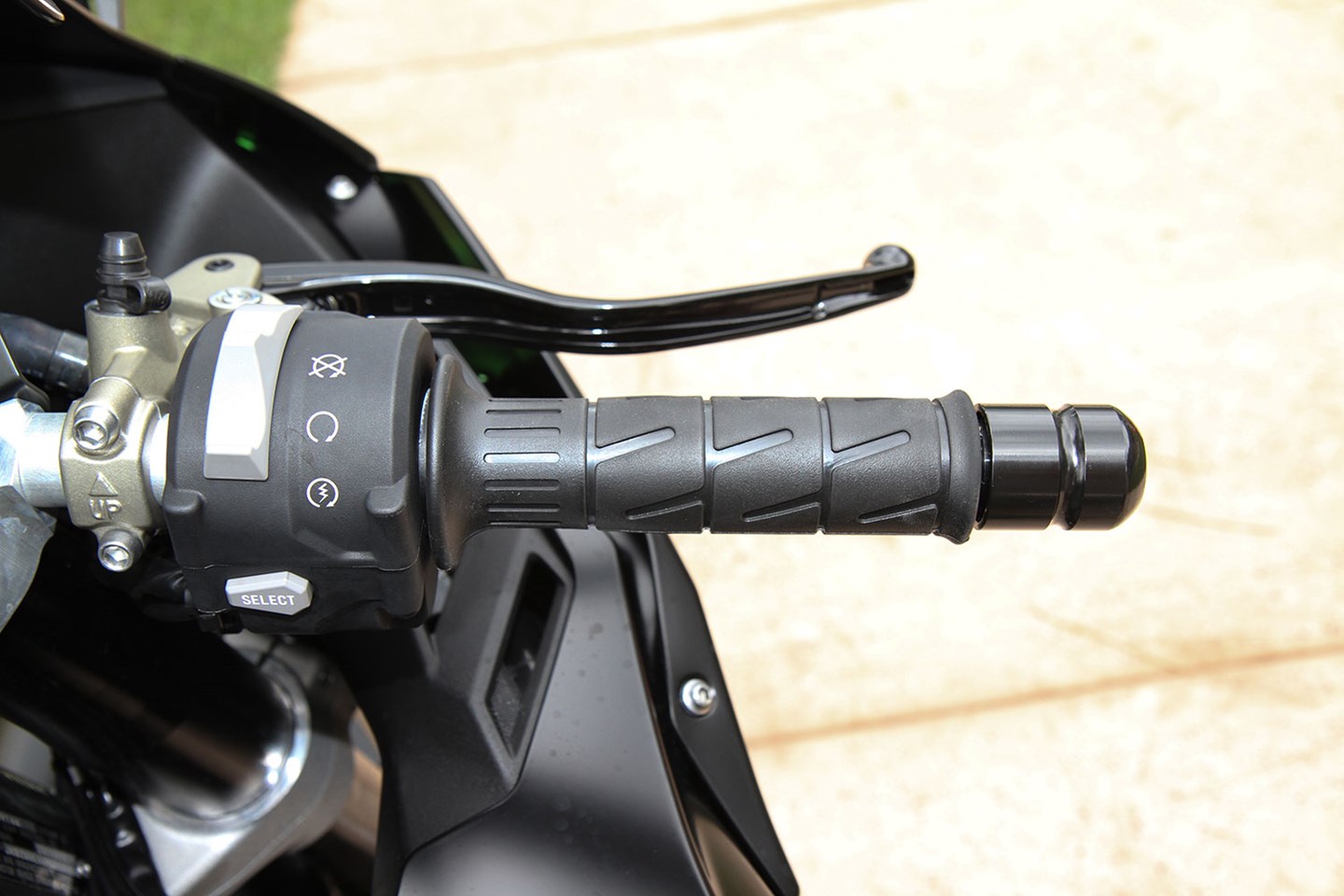
As far as rider aids go the ZX-10R has it all: KCMF (cornering ABS and traction control system), S-KTRC (traction control), KLCM (launch control), KIBS (ABS), KEBC (engine brake control), KQS (quickshifter), ESD (electronic steering damper) and KCC (cruise control) - a top shelf electronics package to rival the European competition, but with a Japanese price tag.
The cruise control makes long motorway rides less painful for wrists and the up/down quickshifter works well, even at low speed.
Traction control is good on the road but still lets the rear spin-up on track in the wet, even in Rain mode, before the electronics eventually chime in to keep everything in check. But ultimately the ZX-10R never steps out of line.
The ZX-10R remains good value when you consider what you are getting in terms of technology, speed and genuine track pedigree. It’s the only one of the litre inline four Japanese sportsbikes that can genuinely boast race success on a world level.
The road bikes to beat mostly come from Europe, though, in the form of the BMW S1000RR (£15,590) and Ducati Panigale V4 (£19,995). And despite not having the racing success of the Kawasaki, the Honda CBR1000RR-R (£19,999) can't be ruled out as a road-going superbike either.