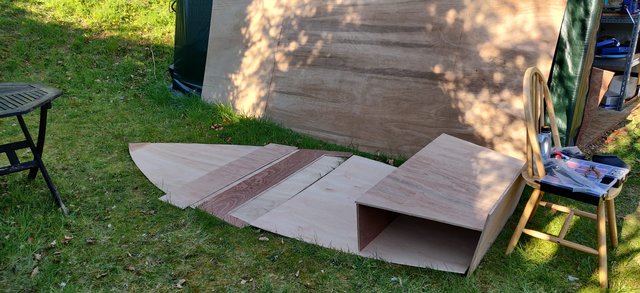
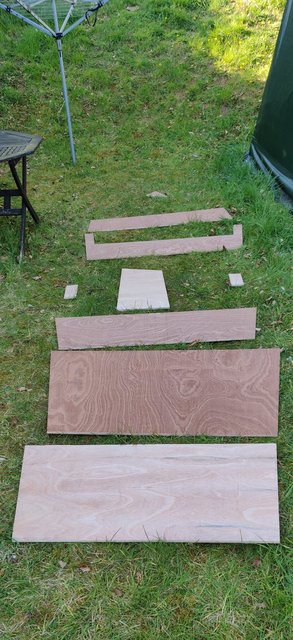
Zimbo wrote: Sat Apr 17, 2021 5:49 pm
Thanks Yambo, all advice is useful to a newbie! I especially like the cake icer idea! When filleting a near vertical joint (the two side panels where they meet at the bow) is it advisable to turn the structure on it's end so the joint is horizontal, or will the epoxy, suitably thickened, stay in place? All ply joints will be covered in 75mm fibreglass tape and epoxied over the fillet internally, and then covered in the same tape saturated with epoxy on the outer seams as well. I decided not to sheath it in fibreglass to keep it light, but will saturate the ply inside and out with epoxy once built and before painting.
The filleting mix wants to be 'peanut butter consistency'. When I made my first boat it had been a few decades since I'd had any peanut butter so I didn't really know what they meant. I knew I didn't want it runny so just kept mixing in filler until I got a consistency that I felt would do the job. It was OK.

The mix should stay in place but if it looks like it's going to sag, bung in some more filler or stand over it for an hour and keep putting it back where you want it.

I don't know what instructions you've got but my method of joining panels and filleting is fairly simple and makes a very strong joint.
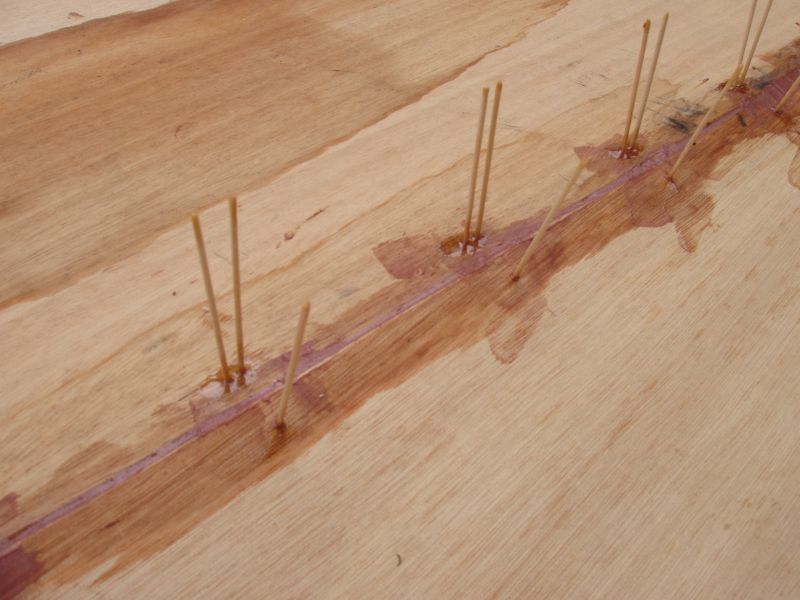
Mix up some thickened epoxy and make small tacking fillets between the stitches to hold everything together. Don't leave blobs, make a small radius filleting tool and make small thin fillets. If you put one between each pair of stitches it'll be easily enough to hold the panels together.
Next day, remove the stitches and lose your temper because there's a twist in the hull! You can ignore this stage if you've made certain the hull is not twisted before the tacking up.

With the stitches removed, make up a pot of epoxy and apply neat epoxy along the panels where you are going to fillet. Mix filler (your silica) into the remaining epoxy and apply the fillets. Small pots of epoxy are better than one big one because if the pot mix is too big it'll start getting hot and go hard. It's way too expensive for that so lots of smaller mixes is better. Once it is spread out it'll take a few hours to cook off but a big mix will go off quickly (and get very hot!). Once the fillets are done and you're happy with them, carefully lay the fibreglass tape on top of the fillets and gently settle it onto the fillets. mix up some more neat epoxy and brush that onto the taped seam and a bit wider than the tape. You'll find the brush may make the epoxy move a bit but just move it back where you want it with the brush. When you're done, the f/glass tape should be wetted out and transparent. Make sure there are no air bubbles anywhere and go and have that cup of tea you've been dying for, you've earned it.

This method makes sure that the whole seam sets up and hardens all at the same time and makes a very strong joint.
Some people use masking tape either side of the joint, do the fillets and then remove the masking tape. They then apply the f/glass tape to the hardened fillets. It's your choice but if you're going to paint the boat . . . You can get really nice fillets applying the epoxy mix between the masking tape (and removing the tape after 3 hours or so) and if you are leaving the boat bright then that's fine. For me, I'm usually going to paint and strength in the joint is more important. lt's your choice basically. The second method will still be strong - people do it all the time but I think f/glassing the wet epoxy is better.
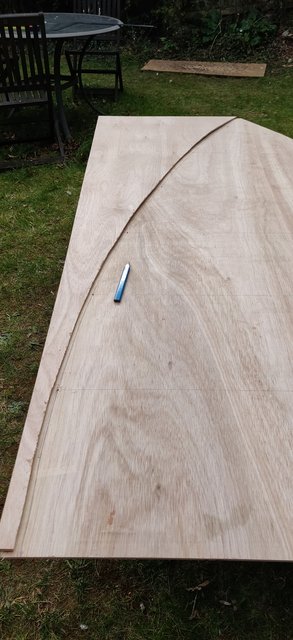
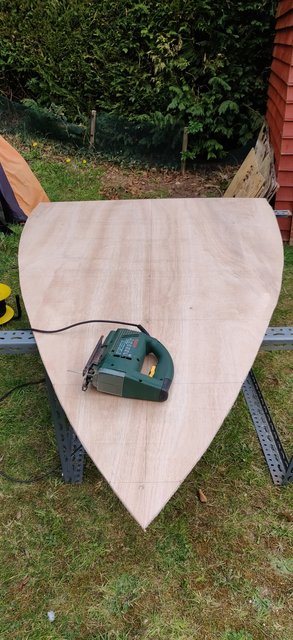
For the outer seams I'd fill any gaps with thickened epoxy (you're using a jigsaw, there will be gaps!), round over the joint (fibreglass does not like sharp edges or corners), fill any gaps that appear after rounding over, sand them smooth then wet the wood with unthickened epoxy, apply the tape and wet it out fully removing any excess just as you would apply fibreglass to any bit of plywood.
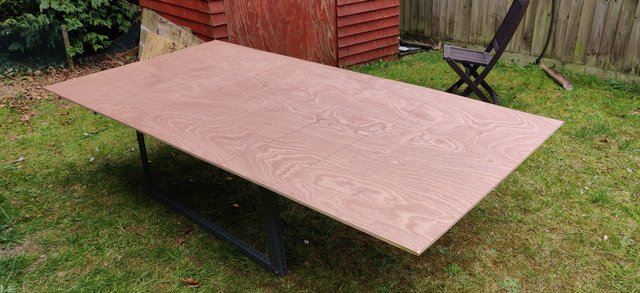
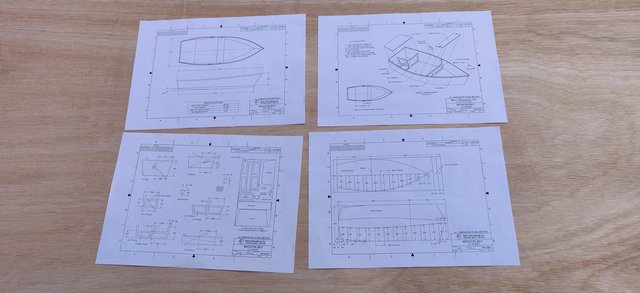
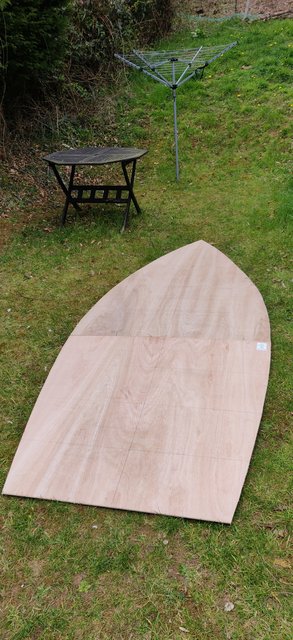
I couldn't tell from the plans but how are you going to join the bottom and side panel pieces together? Do the plans just call for a butt joint or are you scarfing them? If it's a butt joint I'd be inclined to reinforce the joint with a full width bit of plywood and a strip of fibreglass between the panel and the reinforcing piece, all glued up at the same time. Personally I'd do scarf joints but you've already cut the bottom panels . . .